

Why Drills Don’t Work—And What to Do Instead
We’ve all been there. You spend an hour grooving a perfect pass, a powerful swing, or a precise set.
Every repetition is clean, crisp, and controlled.
You feel like you’re finally wiring in the perfect technique.
Then, the match starts, and it all falls apart. The controlled, predictable environment of the drill is replaced by the chaotic, unpredictable reality of a live game, and suddenly, that “perfect” technique is nowhere to be found.
Why does this happen? Because traditional drills strip away the very essence of beach volleyball: the chaos.
The Problem with Traditional Drills
Beach volleyball is an open-skill sport, meaning the environment is constantly changing. You have to read the server, your partner, the opponents, the wind, and the sand, all while executing a physical skill.
Drills often remove these critical perceptual elements, turning the game into a closed-skill, sterile exercise. When you eliminate the need to read and react, you’re not actually practicing beach volleyball; you’re just practicing a small, isolated piece of it.
The “Perfect Practice” Trap
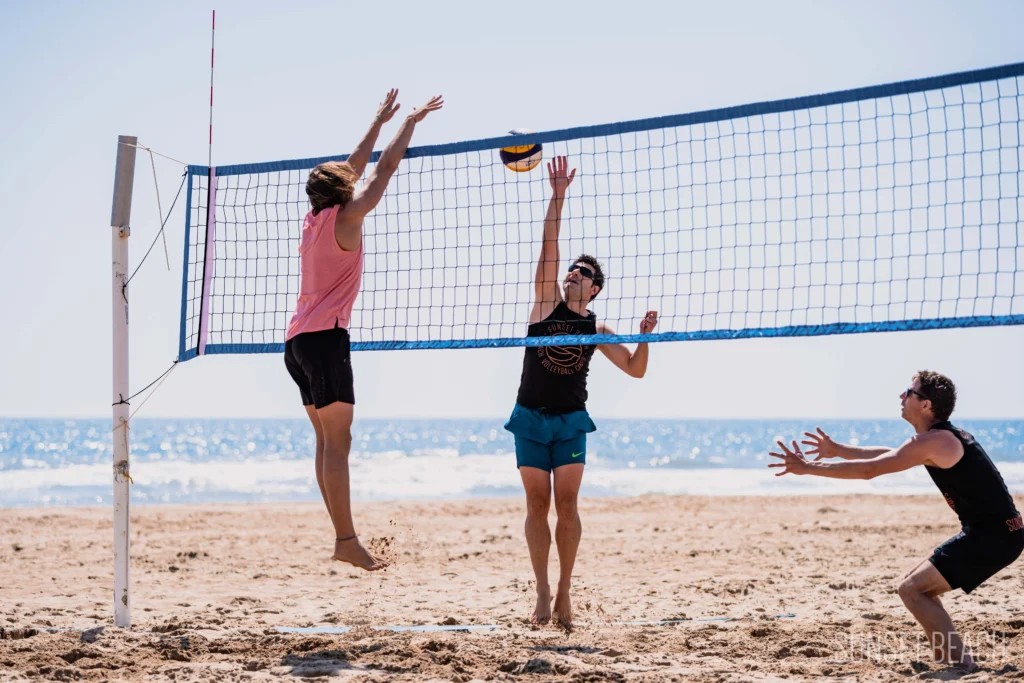
For decades, the mantra has been “perfect practice makes perfect.” The idea that thousands of clean, identical repetitions will build unbreakable muscle memory is deeply ingrained in coaching. But modern tells us something different. The brain doesn’t learn best through mindless repetition; it thrives on variability and challenge. Chasing “perfect” reps can actually hinder your development by teaching your body a rigid solution to a single problem, when what you really need is an adaptable toolkit to solve thousands of different on-court problems.
Legendary coach John Kessel famously said, “Drills are the drugs of coaches.” This powerful statement highlights how easy it is for coaches (and players) to fall in love with the look of a clean, successful drill. It feels productive, it looks good, and it provides a false sense of accomplishment. But true progress isn’t measured in how well you can execute a rehearsed pattern; it’s measured in your ability to adapt and perform in the messy reality of a match.
What Real Learning Looks Like
Forget the idea of a straight line to success. Real learning is a “messy” process. It’s filled with errors, adjustments, and small breakthroughs that happen when you’re forced to problem-solve in a challenging environment. It’s in the moments of struggle—shanking a pass and then adjusting, or getting blocked and figuring out a new shot—that your brain is doing its best work. Repetition has its place, but only when it serves the greater goal of adaptability.
Your Brain Needs Variety
Groundbreaking research in motor learning, particularly the OPTIMAL Theory of Motor Learning by Gabriele Wulf and Rebecca Lewthwaite, has reshaped our understanding of how skills are acquired. Their work, along with contributions from researchers like Rob Gray, emphasizes that learning is accelerated by enhancing player autonomy, building positive expectancies, and maintaining an external focus of attention (focusing on the outcome, not the movement itself). Traditional, repetitive drills often undermine these principles by being overly prescriptive and internally focused.
Mistakes aren’t failures, they are data points. Each error provides your brain with important information to fine-tune movement and, more importantly, decision-making. When you embrace this messy process, you start to see every rally, whether won or lost, as a valuable learning opportunity.
Game-Like Training—How to Make It Work
So, if isolated drills are out, what’s in? The answer lies in an ecological approach and Representative Learning Design (RLD). This sounds complex, but the core idea is simple: your training should look, feel, and present the same challenges as the game itself. The goal is to create a practice environment where the skills of perception and action are coupled, just like they are in a match.
Small Games, Big Learning
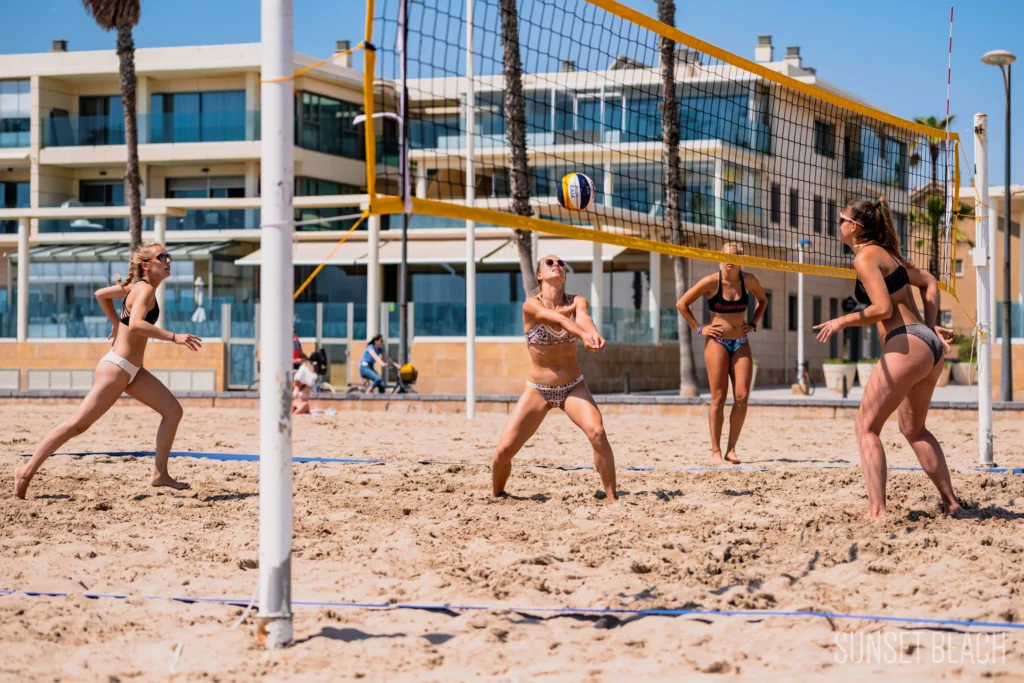
The most effective way to implement RLD is through small-sided, game-like scenarios that force you to read, decide, and execute under pressure. Here are some powerful ways to make your training more game-like:
- 1v1 Mini-Games: Playing on a smaller court (e.g., half-court) forces you to develop incredible ball control, read the attacker’s intentions, and move efficiently. Every touch is meaningful.
- Smaller or Larger Courts: Altering the court dimensions changes everything. A smaller court demands precision and punishes power, while a larger court rewards strategic placement and endurance. Both force you to adapt your timing and shot selection.
- Constraints: This is where you can get creative and target specific weaknesses. For example:
- Only attacking cross-court for a set of points.
- Playing entire rallies where every contact must be a volley (one touch).
- Pressure Conditions: Replicate the mental and physical stress of a real match. Start games with the score at 20-20. Play “wash” drills where a team must win two or three consecutive points to score one “real” point. Train when you’re tired to simulate the end of a long tournament day.
What to Do Instead of Drills
- Start from a real play: Instead of a coach tossing a perfect ball, start every rally with a serve, a pass, or a dig. This immediately engages the perception-action cycle.
- Keep score: The simple act of keeping score changes everything. It elevates focus, introduces pressure, and makes every decision matter.
- Change something every few reps: Don’t let your brain go on autopilot. Vary the direction, tempo, or type of feed. Force constant adaptation.
- Reflect, don’t repeat: After a rally, instead of mindlessly preparing for the next ball, ask yourself, “What did I see? What cues did I miss? What would I do differently next time?”
- Embrace chaos: Train with different partners, on different beaches, in tricky wind conditions, and with random, unpredictable feeds. The more chaos you can handle in practice, the calmer you’ll be in a match.
Make Learning Visible
One of the best ways to accelerate your learning is to video your training sessions. But don’t just watch your technique. Pause the video right before you make contact with the ball and analyze the whole picture. What information was available to you? Where was the defender? Where was the open court? What was your partner doing? This shifts the focus from “how I moved” to “what I saw and decided,” which is the heart of high-level performance.
The Sunset Beach Way
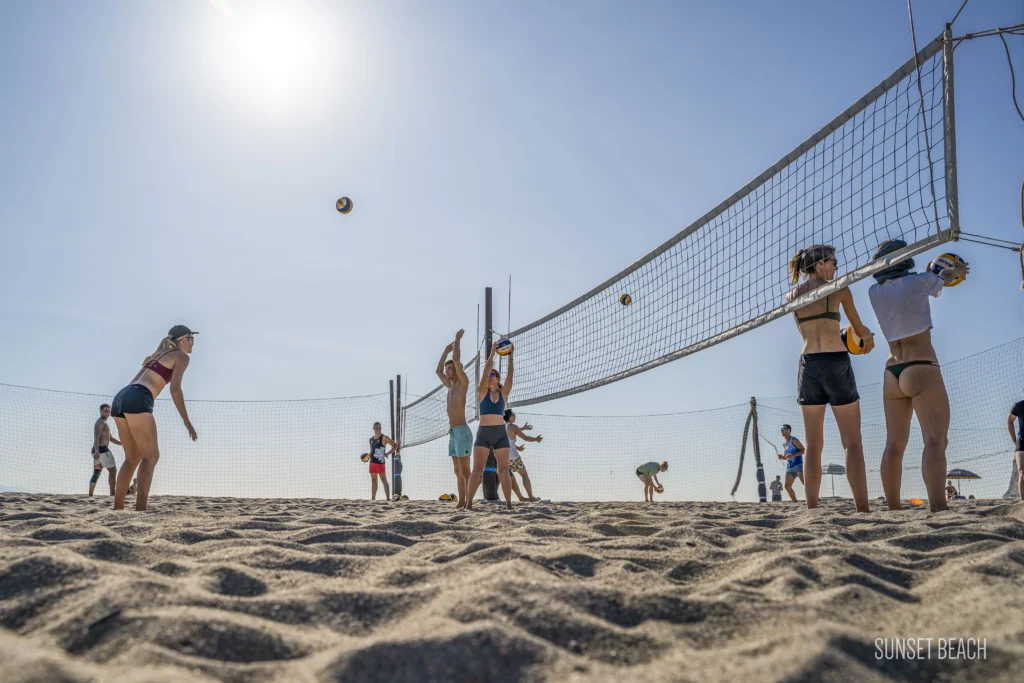
At Sunset Beach Camps, we’ve left drills behind. We build training environments that teach through experience, not repetition.
Our sessions are full of challenges, games, and exploration—just like real beach volleyball. We don’t tell you what to do. We help you see the game differently. Because once you see better, you play smarter.
As we always say, “we coach what we see.”
The Takeaway
It’s time to move beyond the outdated model of chasing perfect, sterile repetitions. Your path to improvement isn’t found in eliminating errors in a drill; it’s found in embracing them in a game. Stop chasing perfect reps and start chasing real, messy, and effective learning. Challenge your perception, sharpen your decision-making, and build an adaptable game that holds up under pressure.
Because in the end, the sand, the wind, the sun, and the opponent across the net are your greatest teachers.
Join Us on the Sand
Train in environments that feel like the game, not like a lab. Challenge yourself, adapt, and enjoy the process.
